
Your outdoor space is the first thing people see when they arrive at your home and the last thing they notice when they leave. Whether it is the driveway at the front, the patio at the back, or the garden in between, the right paving and landscaping ideas can completely change how your property looks, feels, and functions.
Ashford homeowners have a real advantage here. The town’s mix of period properties near the centre, modern new-build developments in areas like Chilmington Green and Great Chart, and rural homes on the outskirts means there is no shortage of opportunity to create something that genuinely suits the character of the house. The challenge is knowing which ideas are worth pursuing and which ones look great in a mood board but do not hold up in a Kent garden through a British winter.
This guide pulls together the best paving and landscaping ideas for every type of Ashford home, front driveways, rear patios, side passages, garden walls, and everything in between. Whether you are planning a full outdoor transformation or just looking for ideas to improve one area, here is where to start.
Why Paving And Landscaping Matter
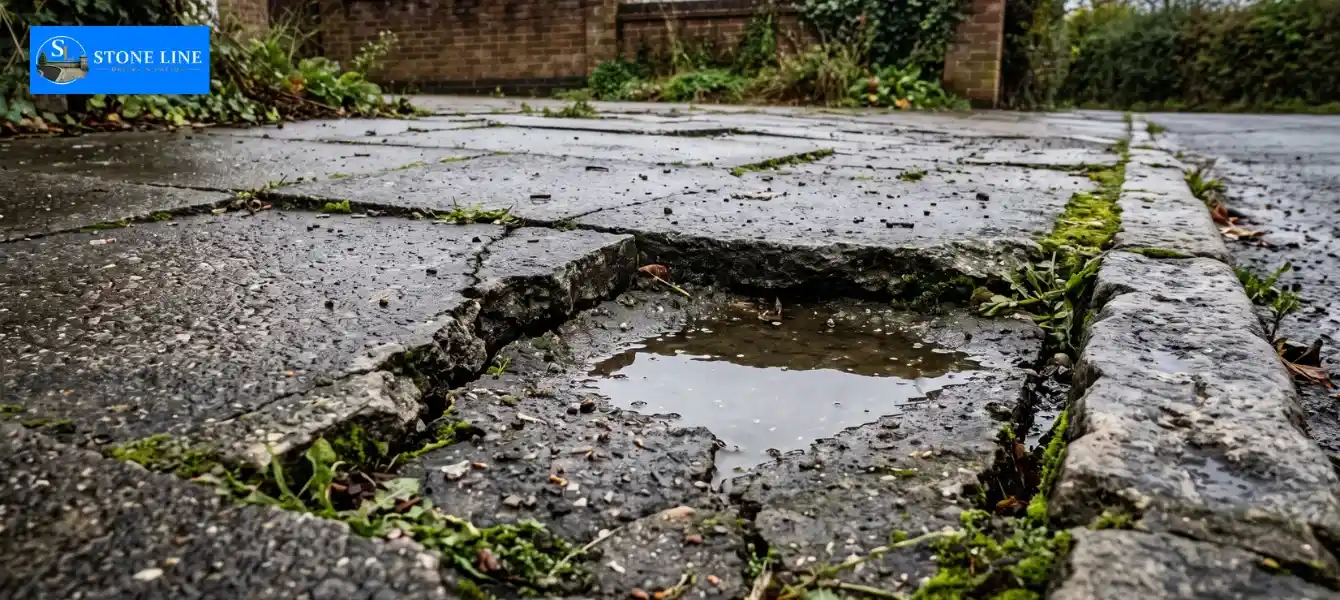
A properly laid driveway eliminates the trip hazards and standing water associated with a cracked or ageing surface. In the garden, well-planned hard landscaping controls how rainwater moves across the plot, which matters across Kent’s mix of clay and chalk soils, where drainage is often slower than homeowners expect.
Beyond function, good paving and landscaping add real kerb appeal and can support a property’s resale value. The reverse is also true: poor drainage, mismatched materials, and paving that ignores the surrounding planting are among the most visible issues a buyer or visitor notices.
Driveway Paving Ideas For Your Outdoor Spaces
Block Paving Driveways
Block paving remains the most popular driveway choice across Ashford and for good reason. The range of block styles, colours, and laying patterns available means it works equally well on a Victorian terrace near the town centre and a detached modern home on a newer development.
The most commonly requested block paving ideas in Ashford right now:
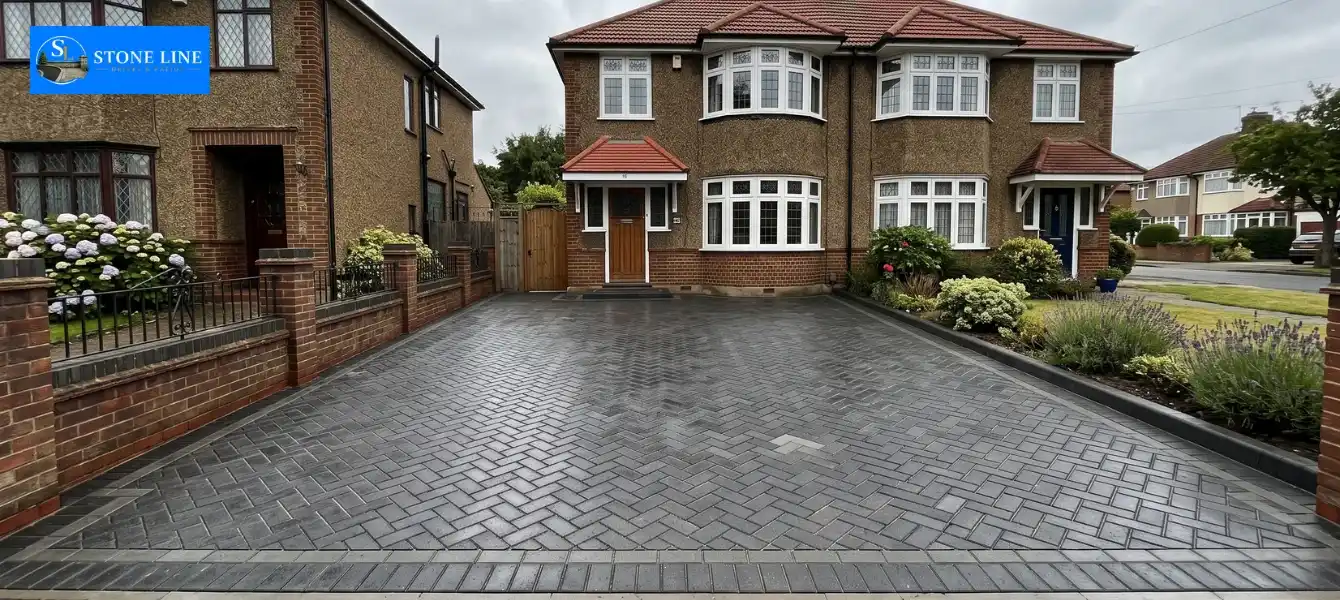
- Herringbone pattern, the most structurally stable option, particularly suited to driveways that take regular vehicle traffic. Works in both traditional charcoal or buff tones and contemporary graphite finishes.
- Basketweave, a classic choice that suits period properties well. Often used with a contrasting border in a different colour to define the edge of the drive.
- Stretcher bond, a cleaner, more contemporary look that works well on modern Ashford homes where the architecture favours straight lines over traditional patterns.
- Mixed colour blends, increasingly popular on larger driveways where homeowners want a natural, varied look rather than a single uniform tone. Autumn blend and weathered tones are particularly well suited to Ashford’s older housing stock.
For Ashford’s newer developments, a charcoal or graphite block in a simple stretcher bond with a flush kerb edge is the most consistent choice. For older properties closer to the town centre or in surrounding villages, buff or brindle tones with a herringbone pattern and a soldier course border tend to work best.
Resin Bound Driveways
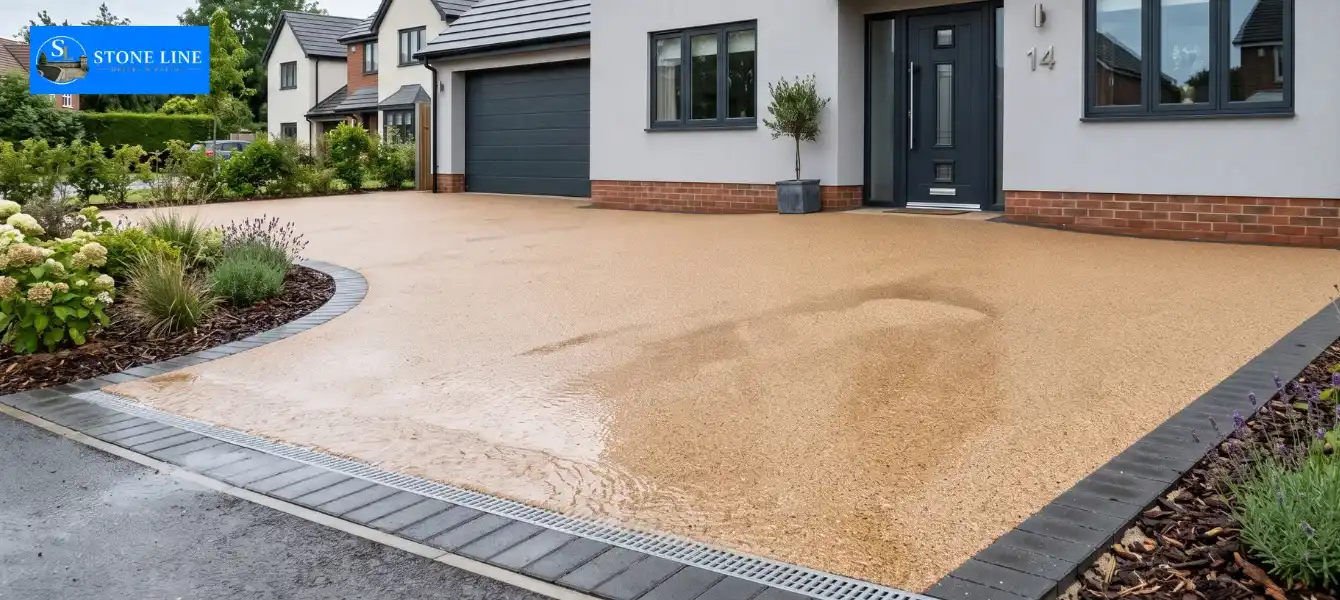
Resin-bound driveways have grown significantly in popularity across Ashford over the last three to four years and are now among the most requested surfaces we install. The appeal is easy to understand: a smooth, seamless finish, a wide range of aggregate colours, and virtually no maintenance once installed.
Resin bound is also fully permeable, which means it meets UK planning drainage requirements without the need for additional drainage channels or soakaways in most cases. For Ashford homeowners in newer developments where permitted development rights require a permeable front surface, resin-bound surfacing is often the simplest solution.
Popular resin driveway ideas for Ashford homes:
- Natural gravel tones (buff, golden, or harvest), the most popular choice for homes where a warm, natural finish is wanted without the maintenance of loose gravel
- Graphite and charcoal blends, a contemporary look that suits modern architecture and pairs well with block paving edging or dark composite fencing
- Mixed aggregate, a blend of colours within the resin that creates visual depth and texture. Works particularly well on larger driveways where a single colour can look flat
One thing worth knowing: resin-bound can be laid directly over a sound existing tarmac or concrete base, which significantly reduces installation costs if the groundwork beneath is already in good condition.
3. Tarmac for a Simple, Cost-Effective Surface
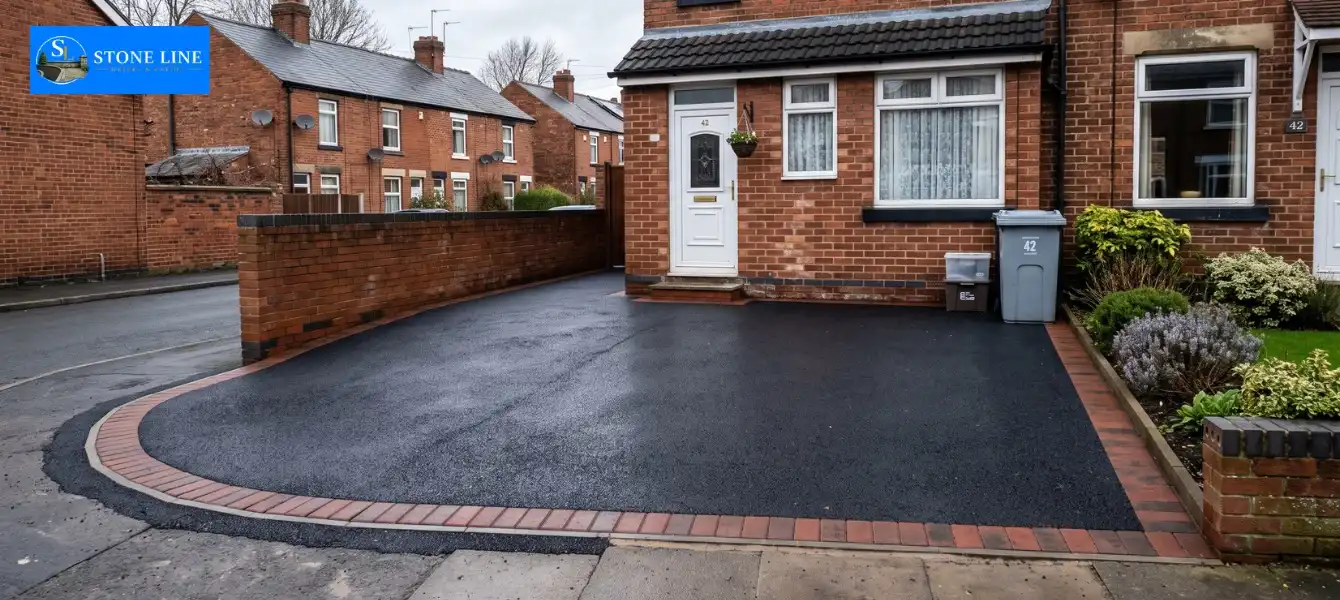
Plain tarmac is functional and cost-effective, but it does not have to look purely utilitarian. A popular approach across Ashford is to use tarmac as the main driveway surface and introduce block paving edging, border courses, or feature corners to give the drive a more finished, designed look.
This approach works well on larger driveways where a full block-paving installation would be a significant investment; the tarmac keeps costs manageable, while the block detailing lifts the finish considerably.
4. Curved Driveways for a Softer Entrance
A gently curved driveway softens the approach to a property and creates a more considered first impression than a straight run, particularly on wider plots. Lining the curve with low planting or discreet lighting highlights the shape rather than working against it.
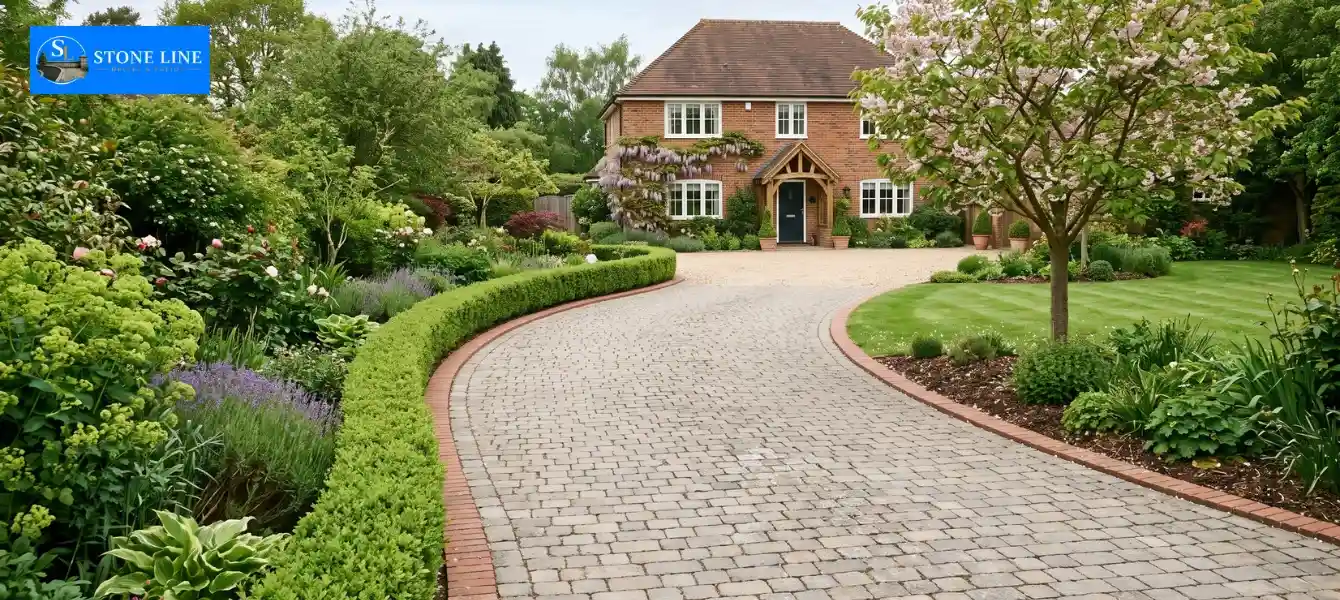
5. Permeable Paving to Manage Run-Off
Permeable block paving, resin, or gravel allows rainwater to soak away naturally rather than run off into the street. This matters for local drainage and can also affect whether a driveway needs planning permission at all, since permeable surfaces are generally treated differently under permitted development rules.
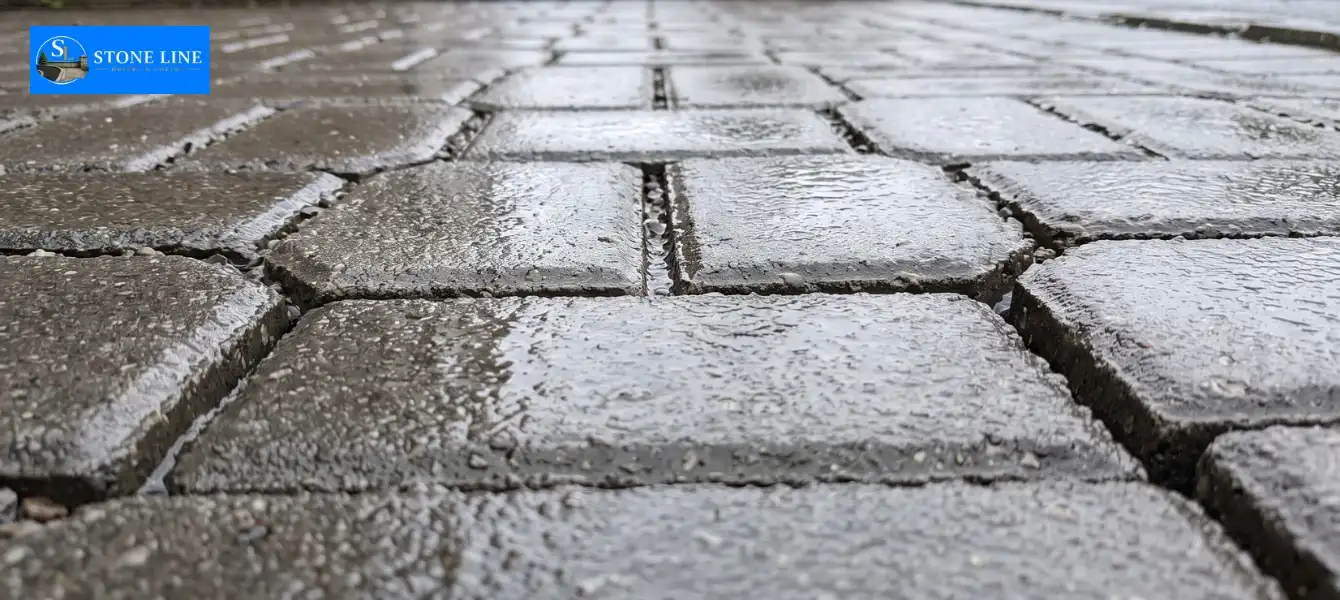
Garden Paving and Landscaping Ideas
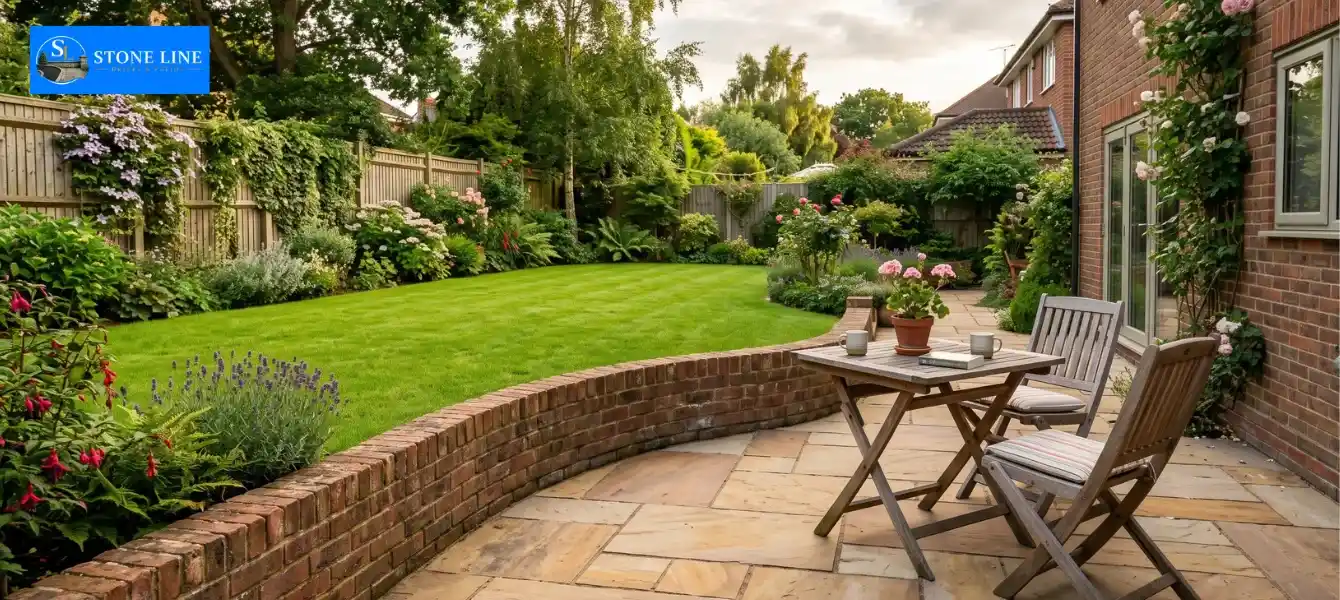
6. Patios in Natural Stone or Porcelain
A well-positioned patio remains one of the most requested garden upgrades. Indian sandstone gives a warm, textured finish that suits older Kent properties, while porcelain offers a sleeker, lower-maintenance surface for a more contemporary garden.
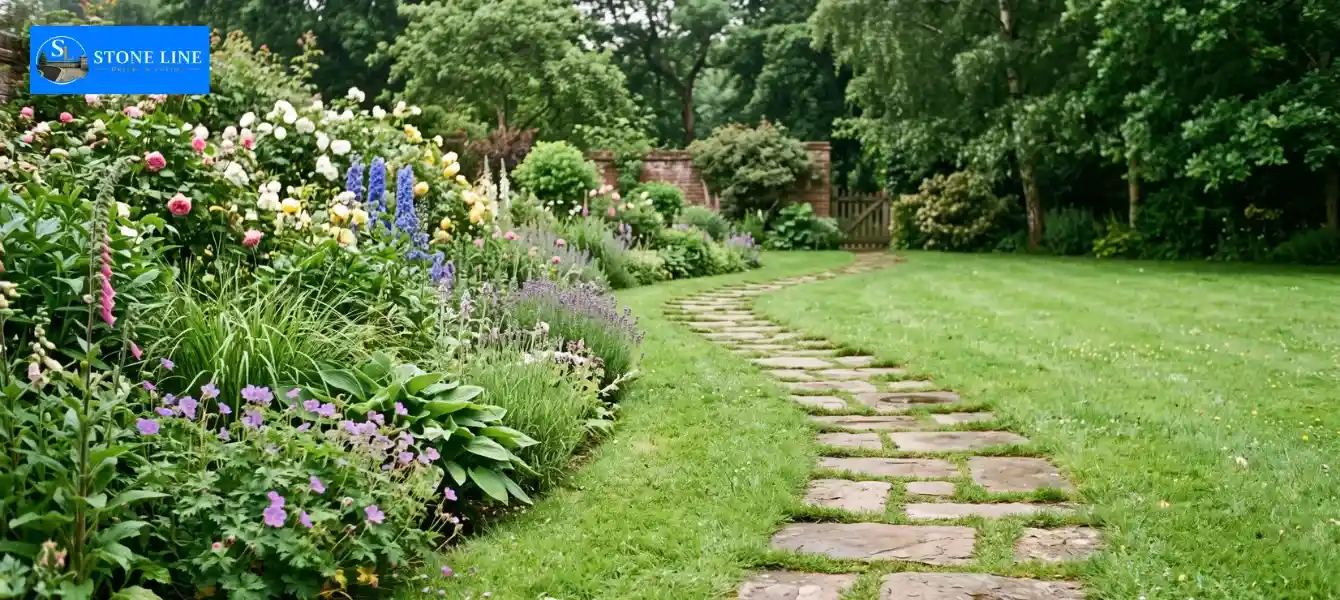
7. Pathways That Connect the Garden
A clear pathway guides how a garden gets used and can make even a modest plot feel larger by encouraging movement between different areas. A curved path suits a softer, cottage-style garden, while a straight path complements more contemporary paving and planting.
8. Raised Beds to Add Structure
Raised beds built from timber, brick, or rendered blockwork define planting zones clearly and make gardening easier where the existing soil is heavy clay, which is common across parts of Kent. They also tie in neatly with a retaining wall if the garden already needs one.
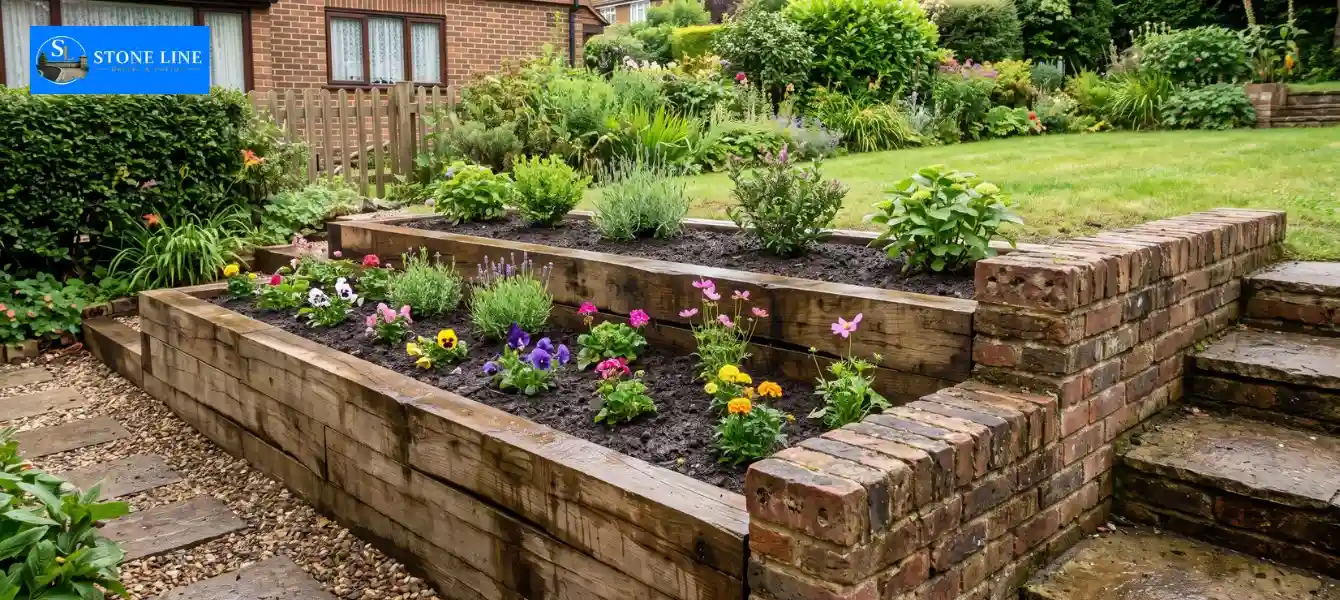
9. Gravel and Planting Combinations
For side returns, front gardens, or areas you don’t want to pave entirely, mixing gravel with structured planting gives a low-maintenance finish that’s also naturally permeable, which helps if the area sits at the front of the house and drainage compliance applies.
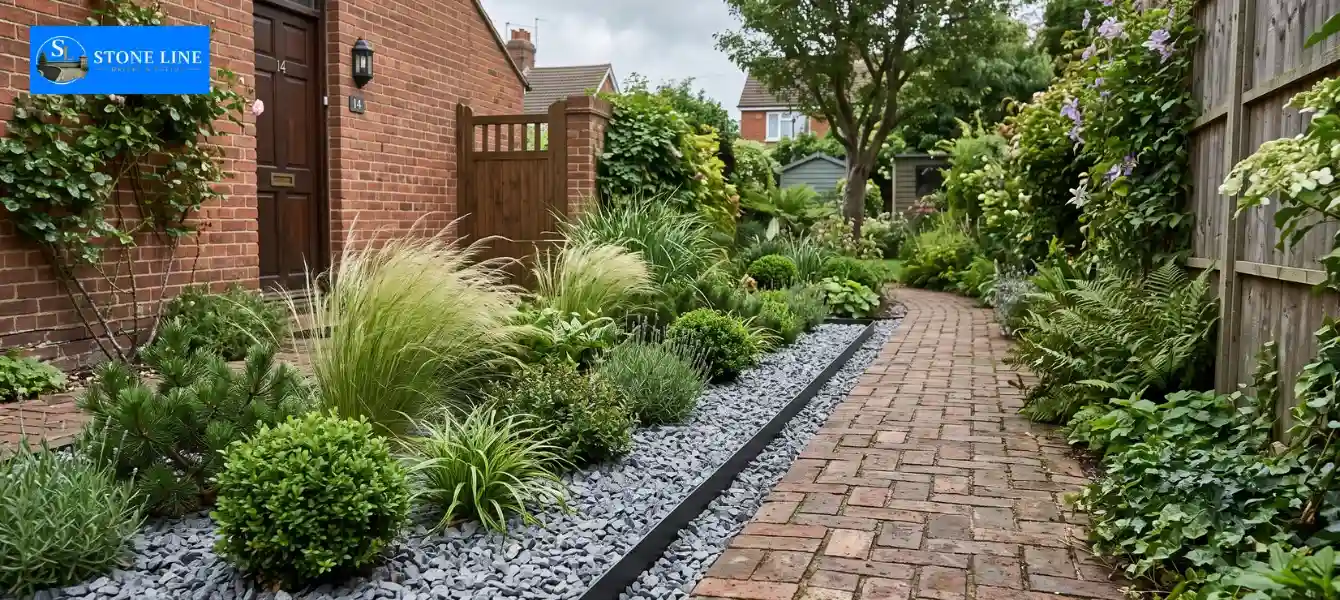
10. Zoned Outdoor Living Spaces
Rather than one uniform patio, splitting a garden into zones, a paved dining area, a lawn or planting area, and a smaller seating nook, gives the space more purpose. A low retaining wall or a change in paving pattern is often enough to mark the divide between zones without needing a fence or hedge. This kind of layout is where professional landscaping services make the biggest difference, since getting the proportions right between zones takes more planning than it looks.
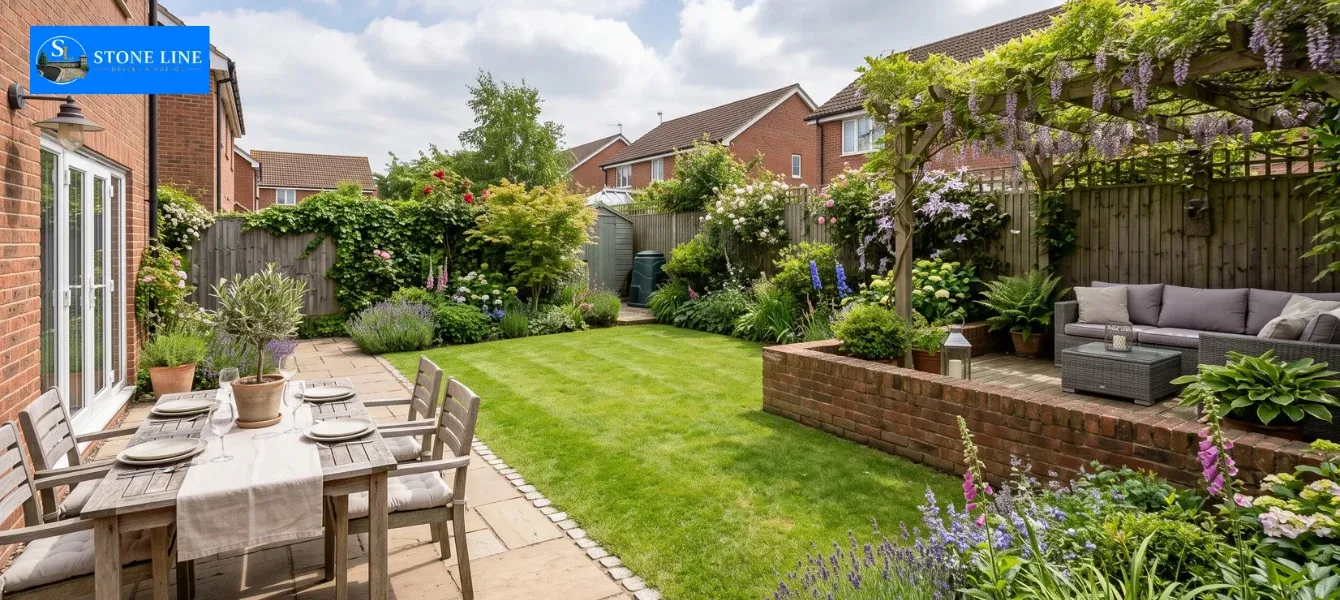
Matching Paving To Ashford’s Housing Styles
Ashford’s mix of older streets and newer estates means there’s no single “right” style of paving for the area, but matching the approach to the property tends to give the best result. A local paving company in Ashford will usually walk you through which option suits your specific street or estate.
- Period terraces and Victorian semis closer to the town centre generally suit brick or clay block paving in warm reds and browns, echoing the original brickwork on the house itself.
- 1930s and post-war semis, common across many established Ashford streets, tend to work well with a simple stretcher bond or basketweave block pattern, kept deliberately understated rather than heavily patterned.
- New-build estates such as Finberry, Repton Park, and Conningbrook Lakes often feature more contemporary brick-and-render finishes, which pair naturally with porcelain paving, resin-bound surfacing, or a simple grey or charcoal block in a stretcher-bond layout.
- Rural and village properties on the outskirts of Ashford often suit natural stone or gravel with timber or stone edging, which sits more comfortably against a countryside setting than a sharp, uniform block pattern.
Best Time to Start a Paving or Landscaping Project
Timing a project around the seasons can save both hassle and cost.
- Spring (March–May) is the busiest booking period for driveway and patio work, since most homeowners plan to finish projects before summer. Booking early avoids a longer wait for a slot.
- Summer (June–August) offers the most reliable weather for groundwork and curing, particularly for resin-bound surfaces, which require dry conditions during installation.
- Autumn (September–November) is a good time for garden landscaping, since planting schemes have time to establish before winter, and driveway contractors are often less booked up than in spring.
- Winter (December–February) isn’t ideal for resin or concrete work, since both need stable temperatures to cure properly, but it’s a practical time to plan, get quotes, and book a slot for early spring.
Bringing Your Driveway And Garden Together
It’s easy to treat the driveway and the back garden as two separate projects, but a more joined-up approach usually yields better results.
- Using the same or a complementary edging material across the front driveway and back patio ties the whole property together visually, rather than making it look like two unrelated jobs.
- Repeating a planting style, such as low box hedging or ornamental grasses, at both the front and back of the property reinforces a consistent look as people move around it.
- If a retaining wall or garden wall is needed at the back, using a matching brick or stone to any front boundary walls keeps the property looking considered from every angle.
- Where a side return or side passage connects the front and back, paving it in the same material as one of the two main areas creates a visual link rather than a mismatched transition.
Using the same or a complementary edging material across the front driveway and back patio ties the whole property together visually… for more edging options, take a look at our driveway edging ideas.
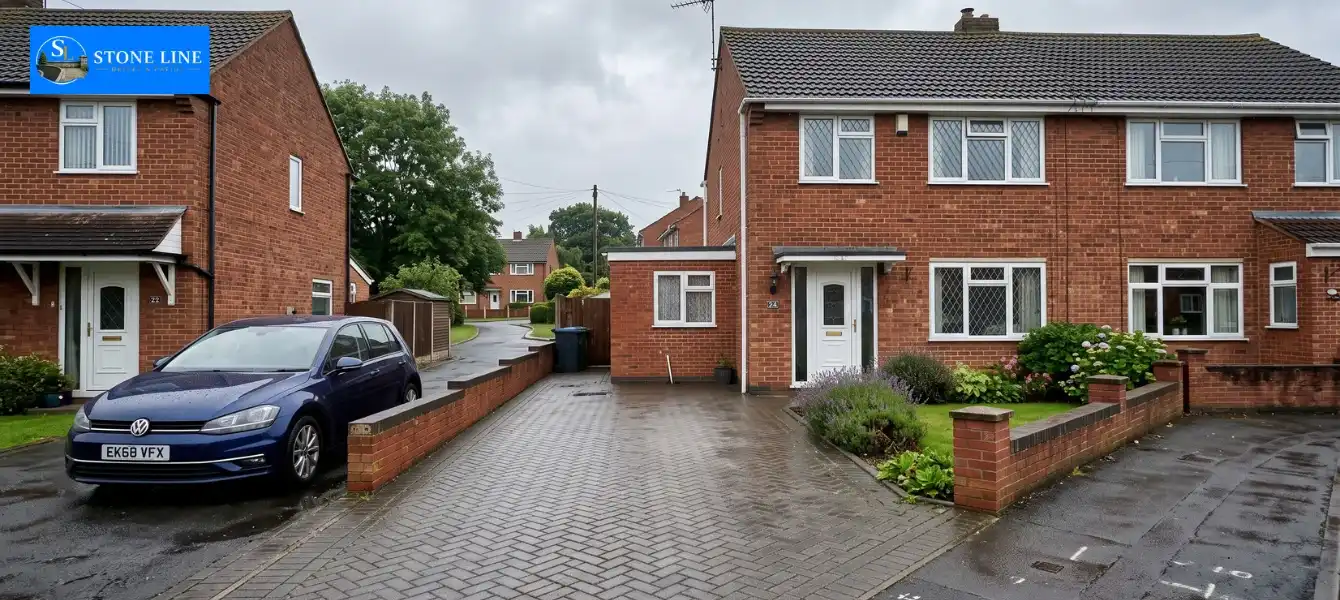
Choosing The Right Materials
A few practical factors are worth weighing before committing to any one material, and this is usually where paving and landscaping services in Ashford add the most value, since material choice affects long-term durability more than it might at first appear.
- Durability: Driveways need a surface that can take vehicle weight day after day. Garden paving needs to handle frost and standing water through a Kent winter without cracking or lifting.
- Maintenance: Resin and permeable block paving need very little upkeep. Natural stone and gravel need more regular attention to stay looking their best.
- Style continuity: Matching or deliberately contrasting new paving with a property’s existing brick or stonework usually gives a more considered result than choosing materials in isolation.
- Slip resistance: Especially important on sloped paths and driveways, where a smooth, non-textured finish can become a genuine hazard in wet weather.
What Does Paving and Landscaping Cost?
| Surface Type | Typical Cost (per m²) | Best For |
|---|---|---|
| Gravel | Around £60 | Budget-friendly, permeable driveways and side returns |
| Block paving | Around £90–£130 | Durable, design-flexible driveways and patios |
| Resin-bound | Around £100–£120 | Modern, low-maintenance, permeable driveways |
| Natural stone or porcelain patio | Varies by material and finish | Garden patios and seating areas |
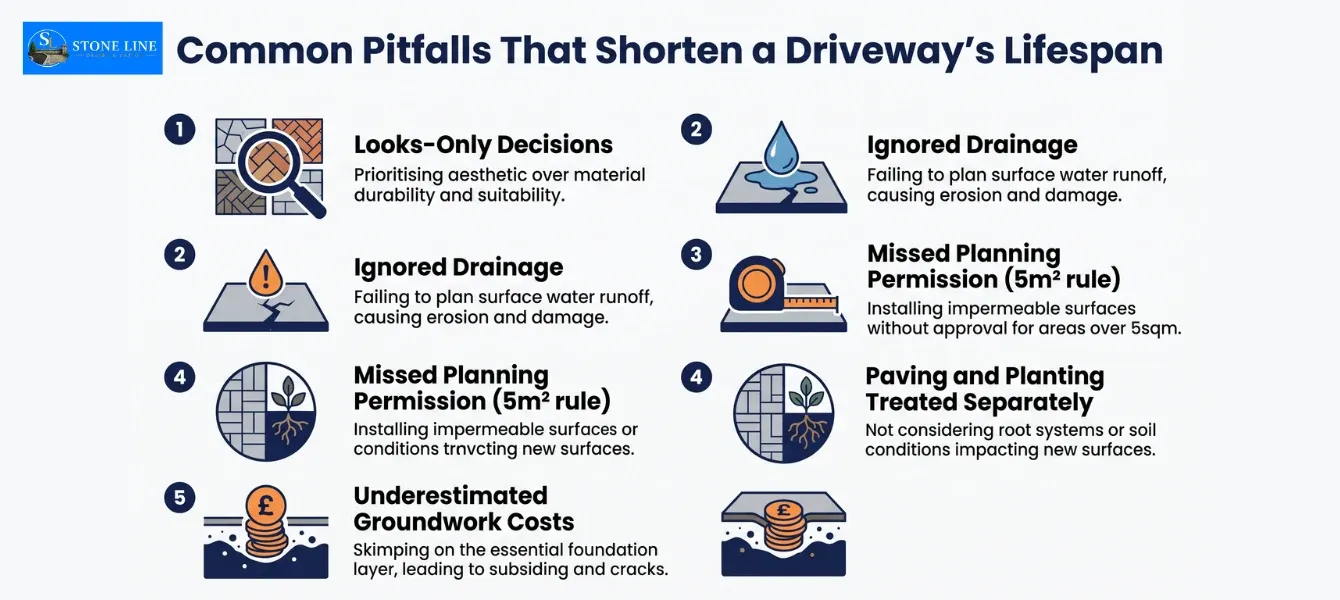
Common Pitfalls That Shorten a Driveway or Patio’s Lifespan
- Choosing a surface based on looks alone, without checking whether the sub-base will support it in the long term.
- Ignoring drainage, which is one of the most common reasons paving fails early or starts to shift.
- Paving over 5m² of a front garden with a non-permeable material without checking whether planning permission applies.
- Treating paving and planting as separate decisions, rather than planning hard and soft landscaping together from the start.
- Underestimating groundwork costs, which are often the largest part of the bill even though they’re the least visible in the finished result.
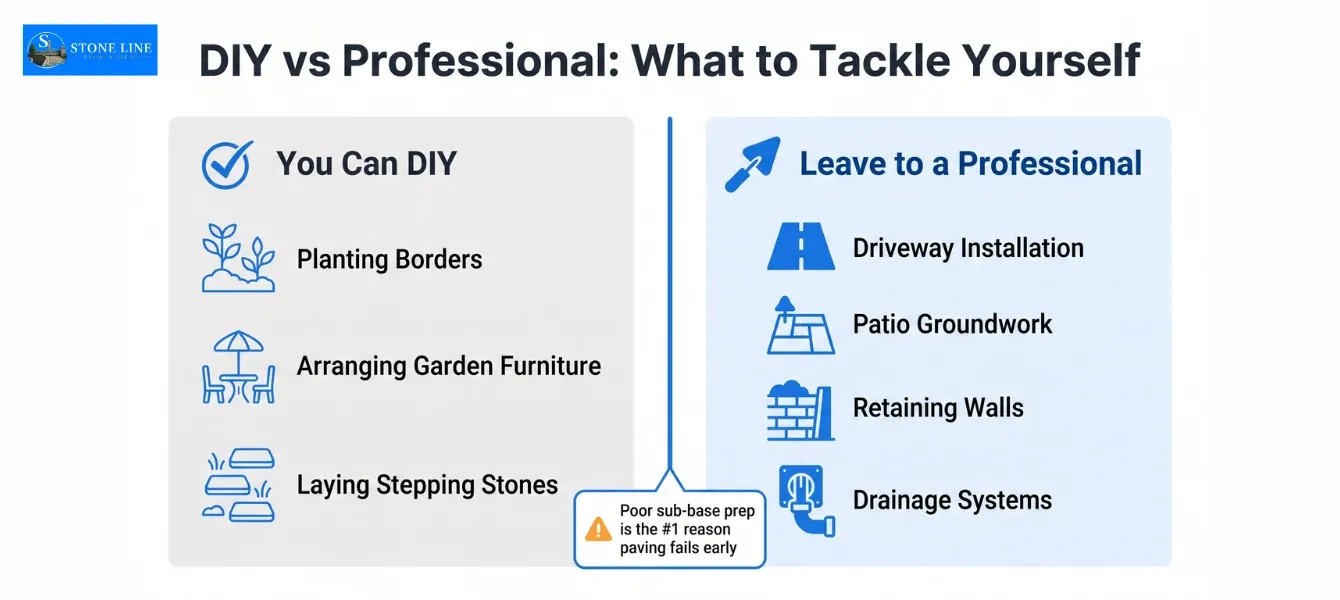
Which Jobs You Can Tackle Yourself, and Which to Leave to a Pro
Some parts of a paving and landscaping project suit a confident DIYer well: planting borders, arranging garden furniture, or laying stepping stones through an existing bed. Anything involving groundwork, drainage, or a structural element- driveways, patios, and retaining walls- is worth leaving to a professional. Poor sub-base preparation or missed drainage is the most common reason paving fails early, and it’s far more expensive to correct afterwards than to get right the first time.
If you’d rather have that side of things handled properly from the outset, Stoneline Drives and Patios can take care of the groundwork, drainage, and structural work from start to finish, so you’re left with a driveway or patio that’s built to last, not just look good on day one. Get in touch today for a free, no-obligation quote, and we’ll talk through the right combination of paving and planting for your outdoor space.
Conclusion
There’s rarely a single “right” answer when it comes to paving and landscaping. A herringbone driveway that suits a Victorian terrace might look out of place outside a new build in Finberry, and a planting scheme that thrives in a sheltered back garden might struggle in an exposed front plot. What matters most is treating the driveway, the garden, and the groundwork beneath them as parts of the same decision, rather than as separate jobs chosen in isolation.
Start with the areas that get the most use or need the most attention first, whether that’s a driveway that’s starting to crack or a garden that’s never quite worked as a space. The materials, patterns, and layouts covered here give a starting point, but the details that make a project last, proper drainage, a solid sub-base, and materials suited to the property, are the same regardless of which style you choose.
FAQ’s
Do I need planning permission for a new driveway in Ashford?
In most cases, no, particularly if you use a permeable surface such as resin-bound paving. If you’re replacing an existing surface with a non-permeable material over 5 square metres, permitted development rules may apply, so it’s worth checking with the local council before starting work.
What's the most low-maintenance paving option for a Kent garden?
Resin-bound paving and porcelain patio tiles both require very little upkeep beyond occasional sweeping and resist the frost and damp that come with a typical Kent winter.
Can paving and landscaping increase my home's value?
Yes. Kerb appeal and a well-planned, functional outdoor space are both things buyers notice, and a tidy, well-drained driveway or garden is one of the more visible improvements on a property.
Should I hire a professional for a driveway or patio?
For anything involving groundwork or drainage, yes. These are the areas most likely to fail if not done properly, and the most expensive to fix once the surface is already down.