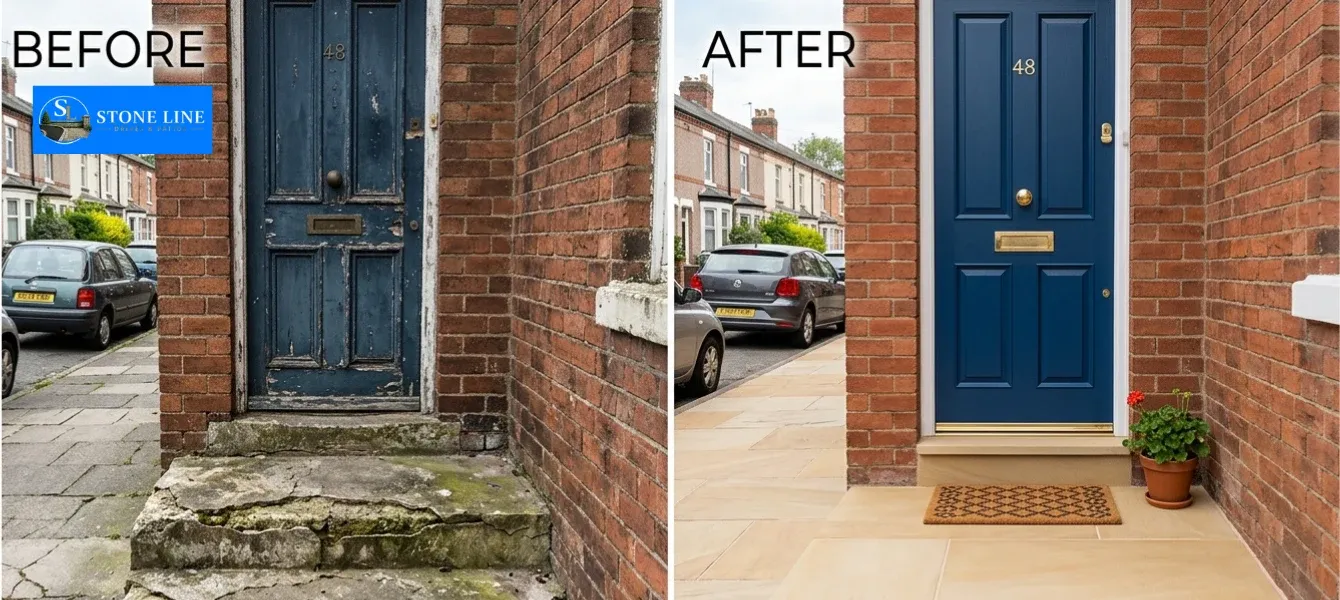
Your front doorstep does more work than most homeowners realise. It’s the first surface a visitor stands on, the last thing you see before you leave the house, and one of the few parts of your property that has to look good and perform well at the same time.
At Stoneline Drives and Patios, we’ve fitted, replaced and repaired front door steps across Ashford and the wider Kent area for years, so we’ve seen first hand which designs hold up and which ones fall apart after one hard winter. This guide pulls together the best front-step ideas for UK homes, with honest advice on materials, safety, cost, and how to make your steps match the rest of your driveway or patio.
Why Your Front Door Steps Matter More Than You Think
It’s easy to overlook a step. It’s small, it’s functional, and most people only think about it once it’s already cracked or wobbling.
But your front door step sits right at the entrance of your home, which means it carries a lot of visual weight for something so compact.
First Impressions And Kerb Appeal
Estate agents talk about kerb appeal for a reason. Buyers and visitors form an opinion within seconds of arriving, often before they’ve even reached the front door. A tired, stained or mismatched step can undercut an otherwise smart-looking house front.
On the flip side, a well-chosen step ties the whole frontage together. It bridges the gap between your driveway or path and your front door, so it needs to feel like part of a considered design rather than an afterthought.
Safety Risks Of Old Or Uneven Steps
This is the part that gets forgotten until something goes wrong. Cracked concrete, loose paving slabs, and worn edges become genuinely dangerous once frost or rain sets in.
We regularly get called out to repair steps that have been patched up two or three times because the underlying problem, usually poor drainage or a weak base, was never fixed. A step that looks fine in summer can turn into a slip hazard the moment temperatures drop.
Impact on Property Value
A smart entrance doesn’t just look nice; it signals that the rest of the property has been looked after. Buyers notice small details like this, and a well-built step is a relatively low-cost way to lift the overall impression of your home before it goes on the market.
Best Materials For Front Door Steps In The UK
Choosing the right material matters just as much as the design itself, particularly given how much our weather swings between soaking wet winters and the occasional sharp frost.
Indian Sandstone
Indian sandstone remains one of the most popular choices for UK homes, and for good reason. It comes in warm, natural tones, from honey and buff through to grey and autumn brown, and no two slabs look quite the same.
It’s naturally textured, which gives it decent grip in wet weather, and it ages well rather than looking worn out. The main downside is cost. It’s a premium material, so it suits homeowners who want their steps to make a statement.
Porcelain Paving
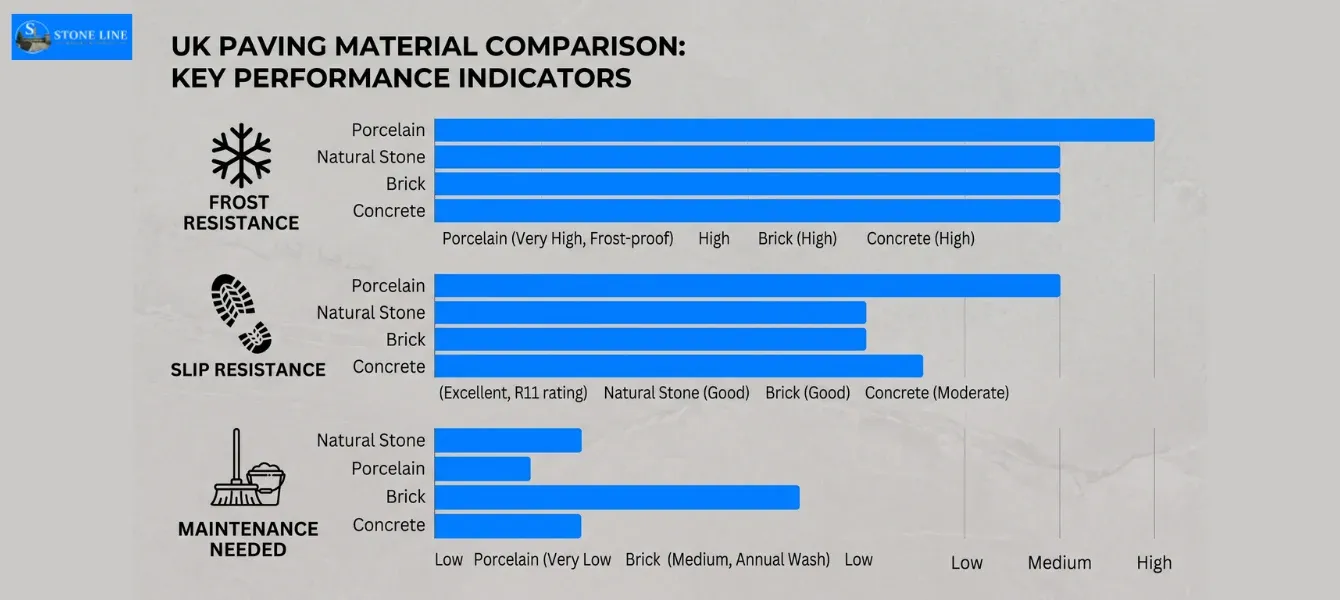
Porcelain has moved well beyond kitchen worktops and into outdoor spaces, and it’s a strong option for front steps. It’s completely non-porous, which means it won’t absorb water and crack during a hard frost, and it’s virtually maintenance-free.
Look for an R11 slip rating on any porcelain you’re considering for outdoor steps. That rating specifically covers surfaces exposed to rain, so it’s the safest bet for an entrance that gets wet regularly.
Block Paving and Brick
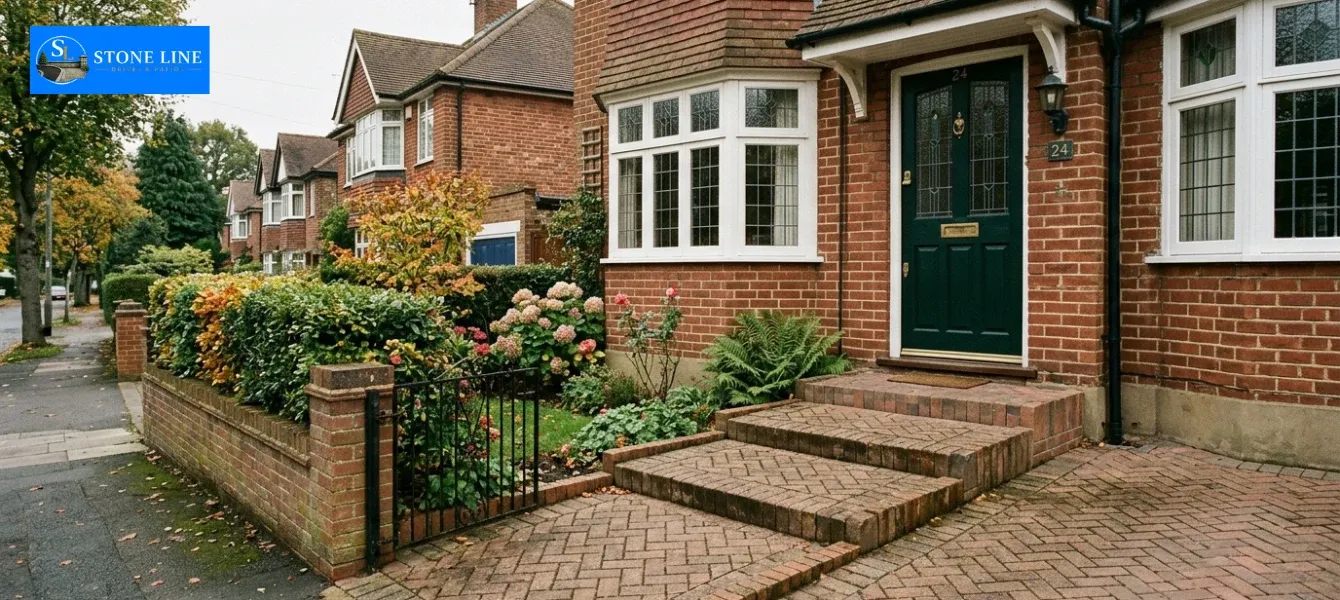
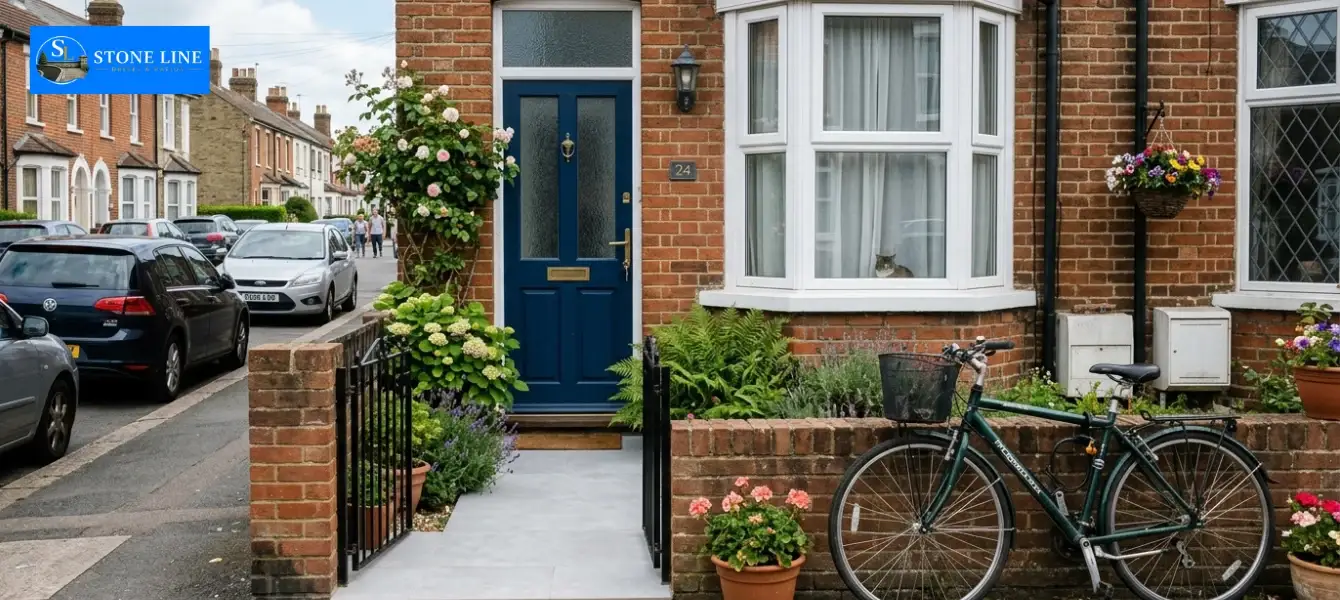
Brick and block paving are the classic, no-nonsense choice, particularly for period properties or homes that already have brick paving on the driveway. Engineering brick is dense, hard-wearing and easy to match to an existing colour scheme.
The one thing to watch is moss growth in shaded, damp corners. A yearly wash keeps it looking sharp, but it’s worth knowing that maintenance is part of the deal.
Concrete
Concrete steps are practical and affordable, and can be finished in a range of textures and colours, so they’re not necessarily as plain as people assume. They’re strong and long-lasting, though a completely flat, undecorated finish can look a little stark unless you add lighting or planting alongside it.
Slate
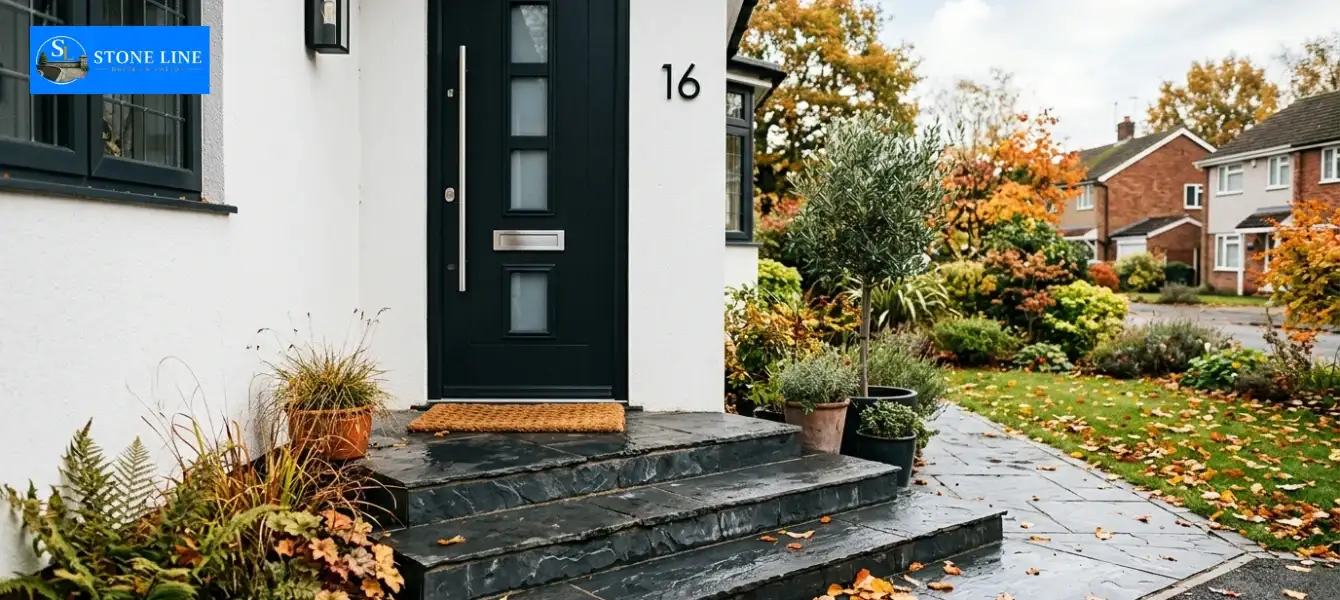
Slate offers a sharper, more contemporary look, especially against light render or pale brick. Choose a natural, riven finish rather than a polished one, since a smooth surface gets slippery fast in the rain.
Slate holds its colour well over time and copes with frost far better than people expect, which makes it a solid option for a modern refresh on an older house.
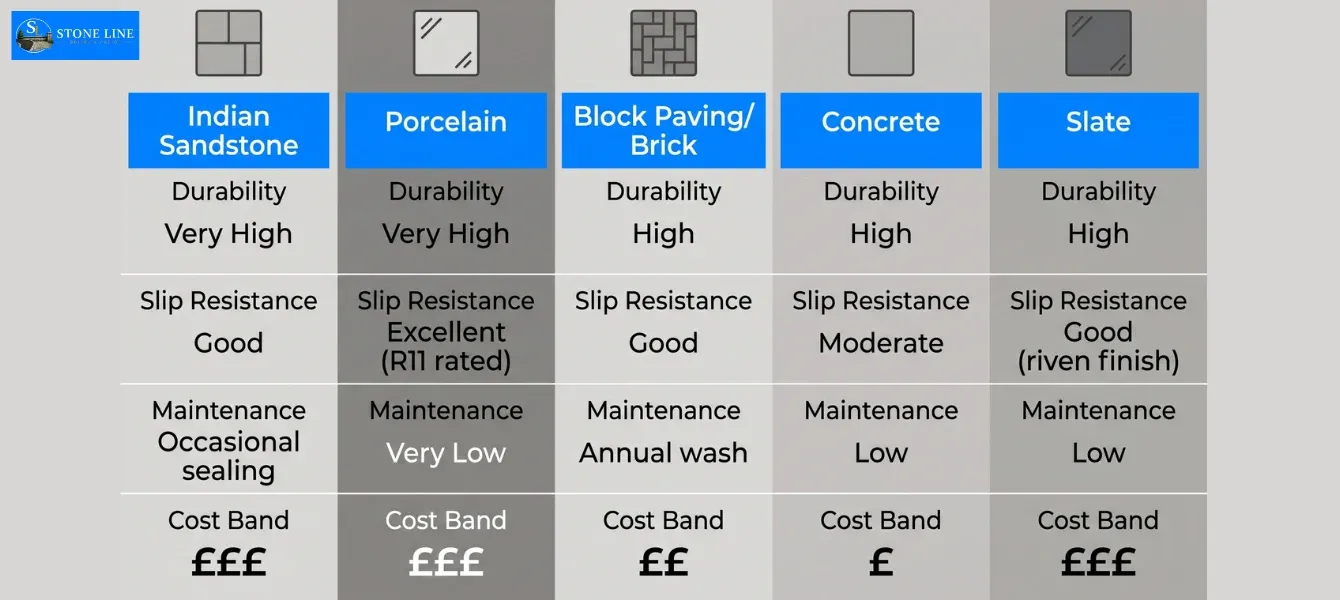
Material Comparison Table
| Material | Durability | Slip Resistance | Maintenance | Typical Cost Band |
|---|
| Indian Sandstone | Very high | Good (natural texture) | Occasional sealing | £££ |
| Porcelain | Very high | Excellent (with R11 rating) | Very low | £££ |
| Block Paving/Brick | High | Good | Annual wash | ££ |
| Concrete | High | Moderate | Low | £ |
| Slate | High | Good (riven finish) | Low | £££ |
Front Door Step Design Ideas By Home Style
The best design for your steps depends heavily on your property’s age and style. What suits a Victorian terrace won’t always suit a 1990s new build.
Classic and Period Homes
- Brick borders with sandstone infill keep the traditional character while adding texture.
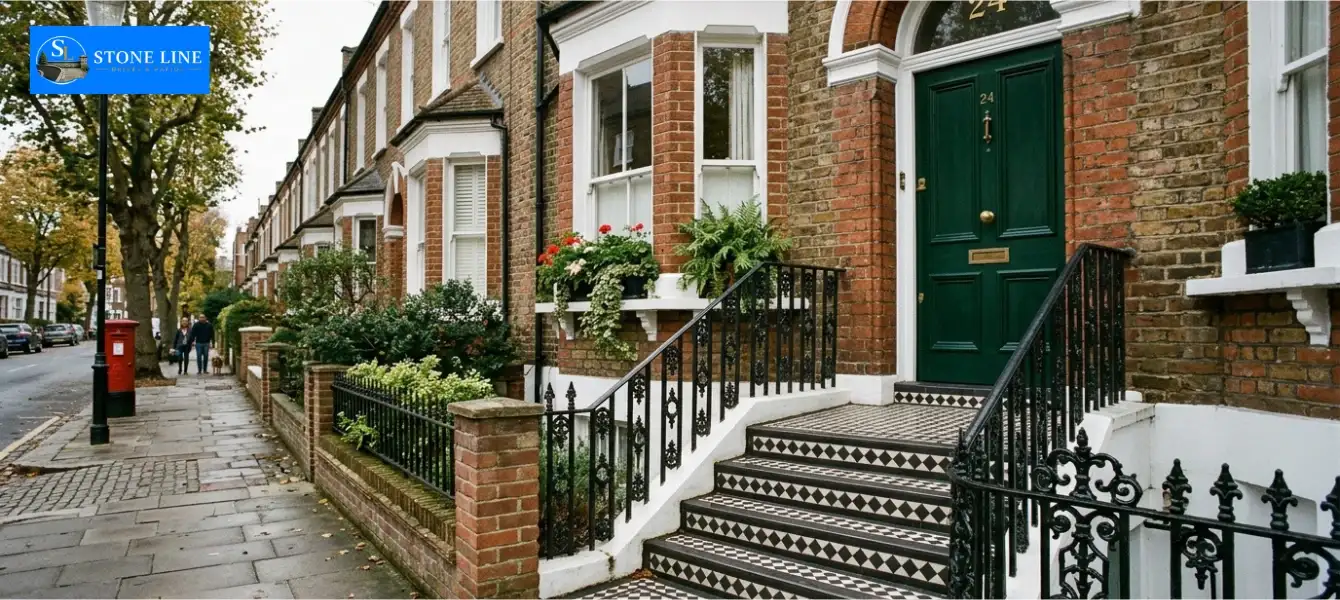
- Victorian geometric tiles, black and white or coloured patterns that suit terraced and Edwardian homes.
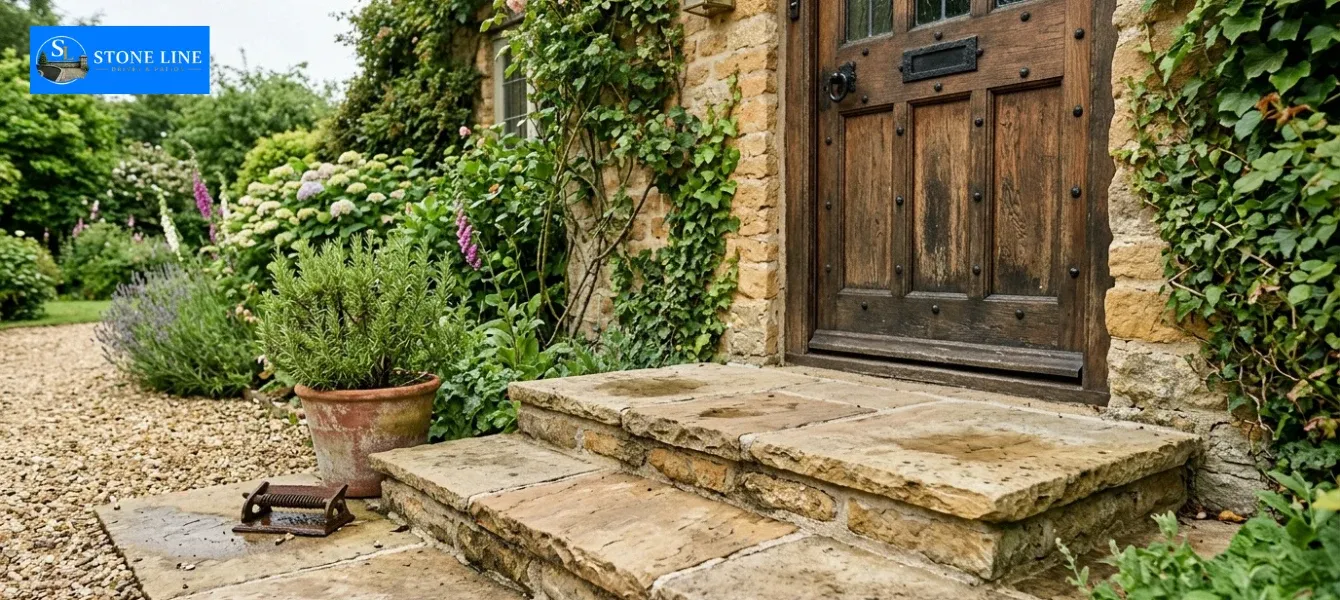
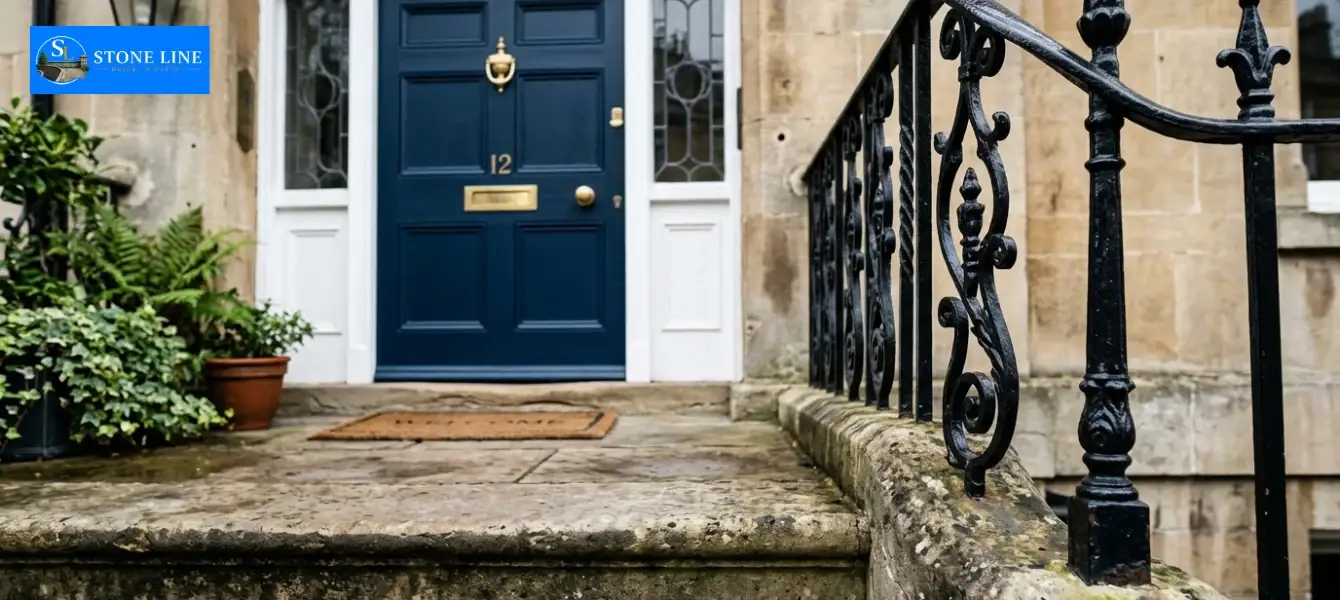
- Weathered natural stone lets the step age gracefully alongside an older facade.
Modern New Builds
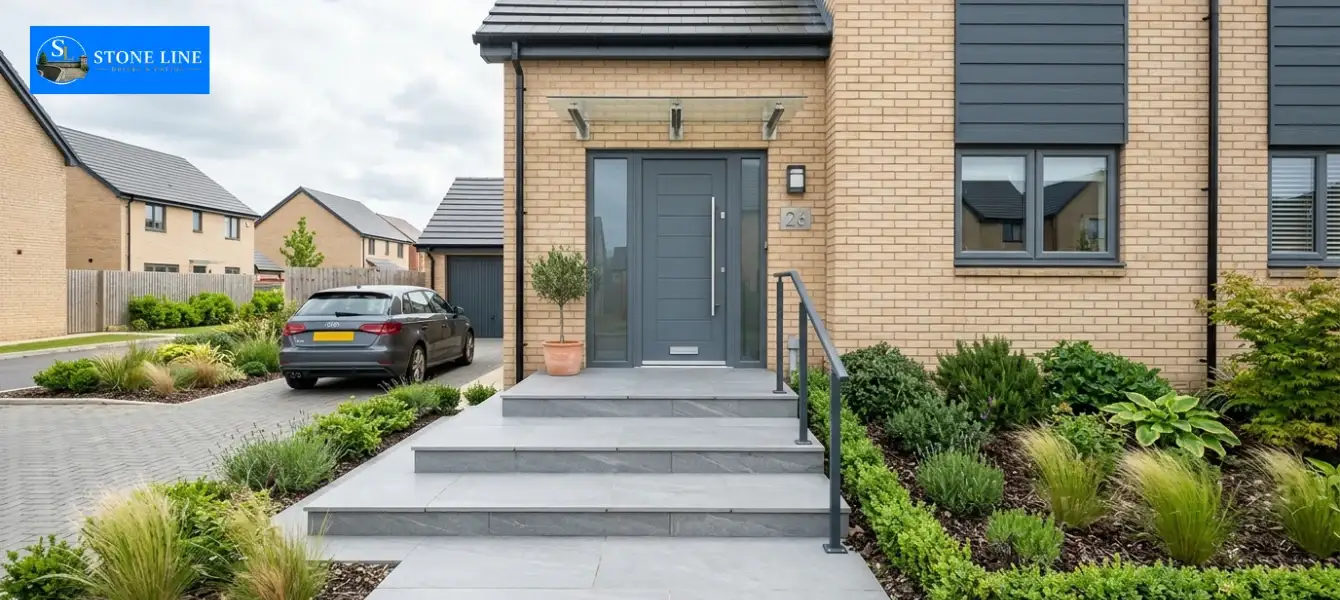
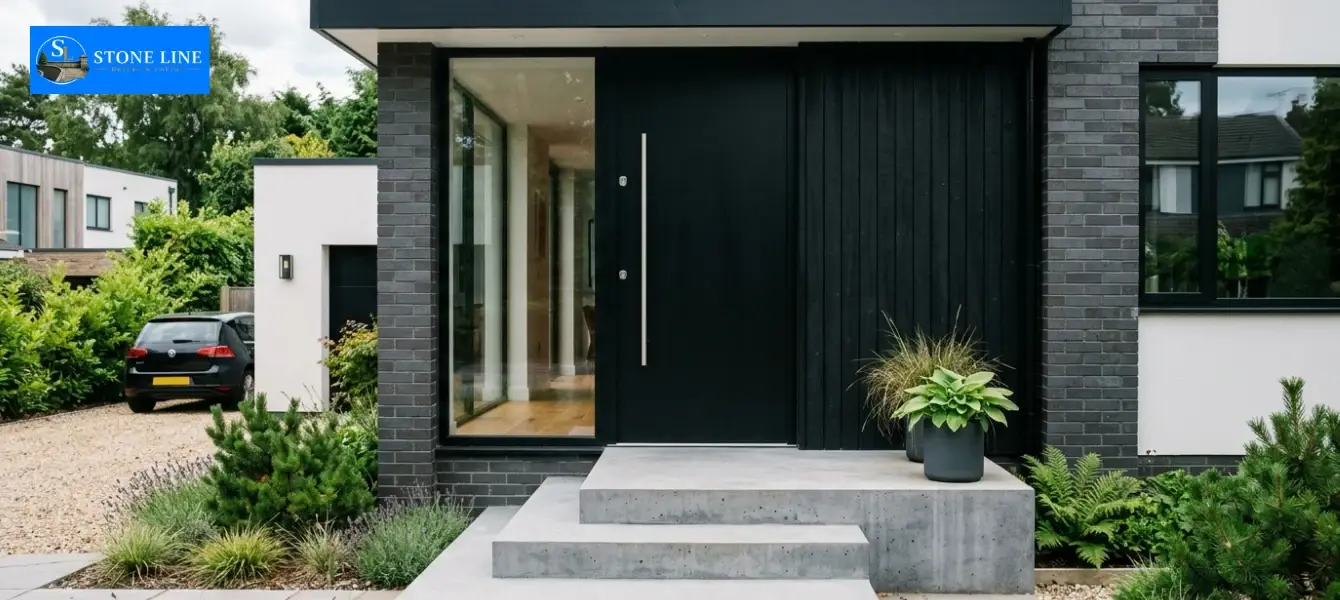
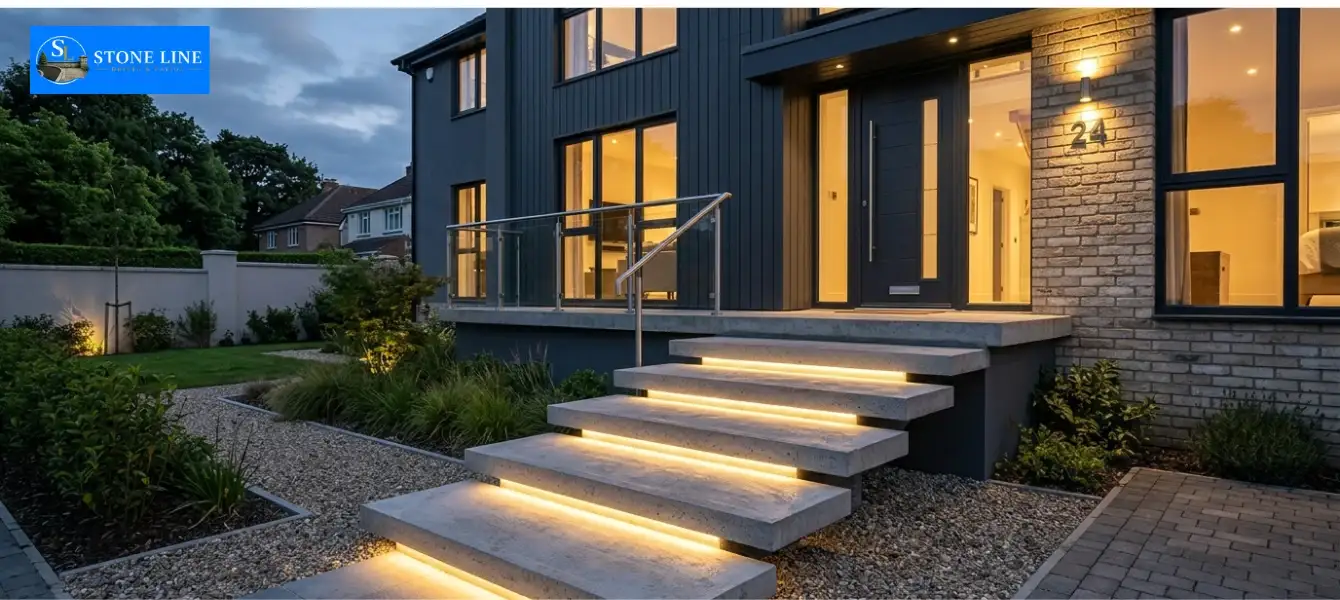
- Floating concrete steps with a visible gap beneath each tread, often paired with hidden LED strips.
- Large format porcelain slabs for a clean, almost seamless look with minimal grout lines.
- Dark slate for sharp contrast against light brick or render.
Small or Narrow Entrances
Not every home has room for a grand staircase to the door, and that’s fine.
- A single, wide step often works better than two narrow ones, giving you somewhere to actually stand while you find your keys
- Simple materials like concrete or porcelain keep a small space looking clean rather than cluttered
Cottage and Rural Properties
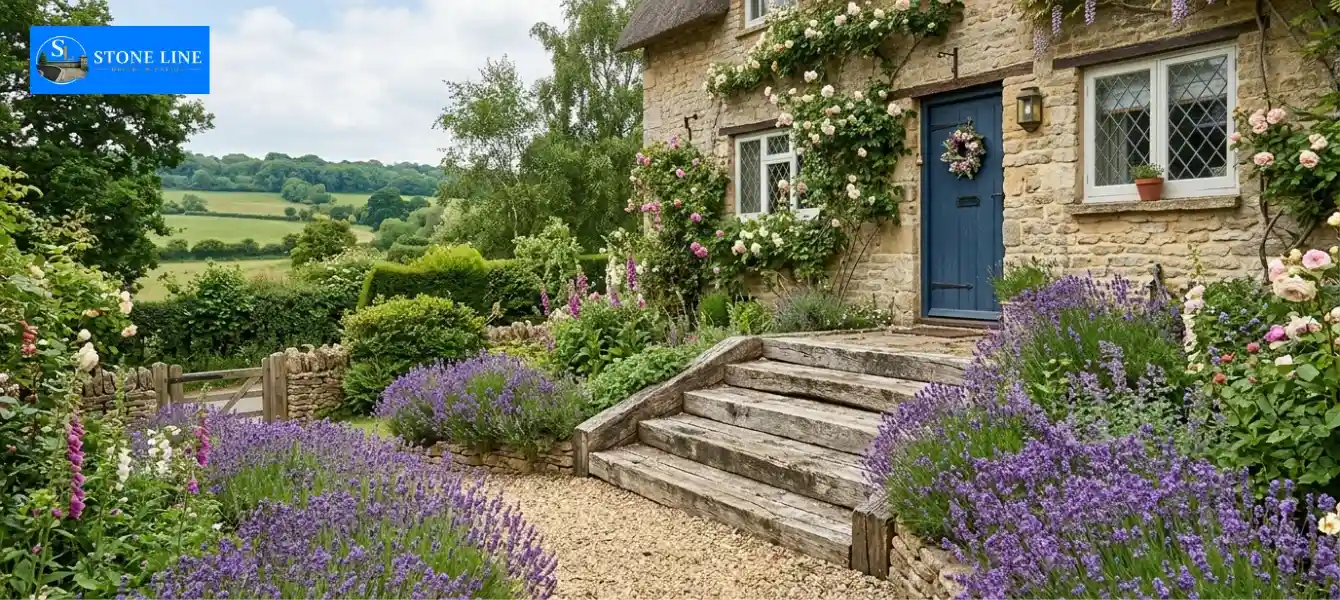
- Timber sleepers, pressure-treated to cope with damp conditions, suit gravel paths and cottage gardens.
- Curved brick steps soften a straight facade and work well where a path changes direction.
Finishing Touches That Elevate Your Entrance
Once the structural work is sorted, small details make a surprisingly big difference.
Built-In Planters and Greenery
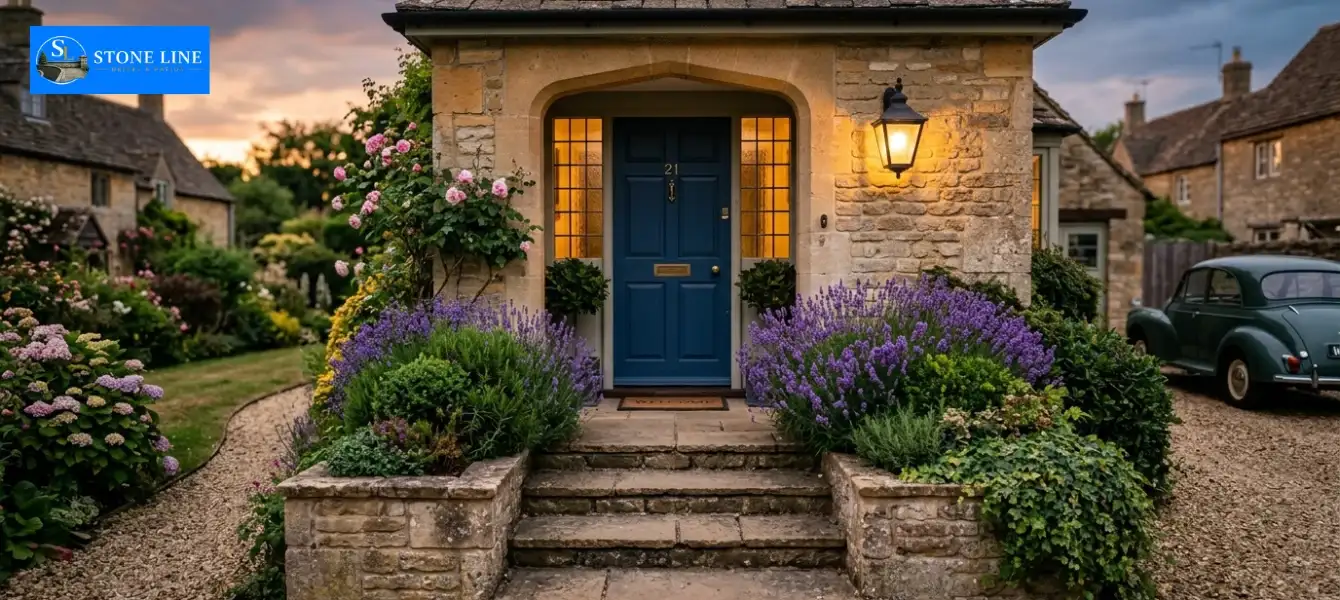
Low-maintenance plants like lavender, box or evergreen grasses handle British weather well and soften the hard landscaping either side of your steps. Built-in planters also help frame the doorway rather than leaving it exposed.
Step Lighting for Safety and Style
Lighting isn’t just decorative. Under-step LEDs or simple wall-mounted lanterns make a real difference on dark winter evenings, both for safety and for making your entrance feel welcoming.
Railings and Bullnose Edges
A bullnose edge, where the front of each step is rounded rather than sharp, softens the overall look and reduces the risk of stubbing a toe or taking a nasty trip. Railings are worth considering on any step with more than two risers, particularly for elderly relatives or visitors.
Front Door Steps That Match Your Driveway Or Patio
This is where many front-doorstep projects go wrong. Homeowners choose a step design in isolation, without considering how it sits relative to the rest of the frontage.
Creating a Cohesive Look Across Your Whole Frontage
Your step, driveway and any front garden paving should feel like they belong to the same design, not three separate decisions made at different times.
Matching Steps to a Block Paving Driveway
If you’ve already got block paving down, or you’re planning a new driveway, our block paving services in Ashford can help you choose a step material that echoes the same tone or texture, creating a much stronger finished look than picking something completely different.
Matching Steps to an Existing Patio
The same logic applies out the back. If your patio uses Indian sandstone or porcelain, carrying that material through to the front steps gives your whole property a consistent, considered feel rather than a patchwork of styles.
Safety And Building Considerations
This is the section that most front-door step guides skip entirely, but it matters more than aesthetics. In most cases, replacing or adding front door steps doesn’t require planning permission, since it falls under permitted development. It’s likely to become a factor only if you’re significantly altering ground levels or building steps that affect a shared boundary or a public footpath.
Anti-Slip Ratings Explained
Outdoor surfaces are rated using the R scale, and R11 is generally recommended for exposed entrance steps in the UK. It’s a straightforward spec to ask for when you’re comparing tiles or porcelain, and it takes the guesswork out of choosing a safe surface.
Comfortable Step Height and Even Risers
A step height of roughly 150mm to 170mm feels natural to most people and is easier for children and older visitors to manage. Uneven risers, where one step is noticeably taller or shorter than the next, are one of the most common causes of trips on domestic steps.
Drainage and Sloping Away From the Doorway
Steps should have a slight fall away from the house, typically around 1 in 60, so rainwater drains off rather than pooling against the threshold. Poor drainage here is one of the most common causes of damp creeping in around a front door.
Front Door Steps Built For Kent’s Weather
Kent’s clay-heavy soil moves more than people expect, particularly through freeze-thaw cycles in winter. A step that isn’t laid on a proper foundation can crack or shift within a year or two, even if the material itself is durable.
This is the main reason we always recommend proper groundwork rather than a quick concrete pour over the existing base. It costs a little more upfront but saves you from having to redo the job twice.
Ready To Transform Your Entrance?
Contact us and get a free, no-obligation quote from Stoneline Drives and Patios today. As a professional paving company in Ashford, we proudly serve Ashford and the surrounding Kent area, and we’re happy to advise on the right material and design for your home before you commit to anything.
Conclusion
The best front door steps balance three things: how they look, how safe they are, and how well they’ll hold up to UK weather year after year. Whether you’re drawn to classic brick, warm Indian sandstone or a sharp modern porcelain finish, the details around drainage, slip resistance and matching the rest of your frontage are what separate a step that lasts from one you’ll be repairing again in a few years.
If you’re planning a new driveway or patio at the same time, it’s worth considering your front steps as part of the same project rather than a separate job further down the line.
FAQ’s